The Importance of Decodable Readers in Effective Literacy Instruction
Posted by Brianspring on 9th Feb 2026



Decodable readers support early readers in applying phonics skills within meaningful text, strengthening accuracy, fluency, and comprehension. Grounded in the science of reading, research highlights the importance of aligning text with instruction to support long-term reading success.
Addressing a Persistent Literacy Challenge
Learning to read is essential for academic success, yet national data continues to show that many students do not reach reading proficiency by the end of elementary school. Research consistently reveals that the quality of early reading instruction is crucial for long-term outcomes (National Center for Education Statistics, 2024; Thomas, 2022).
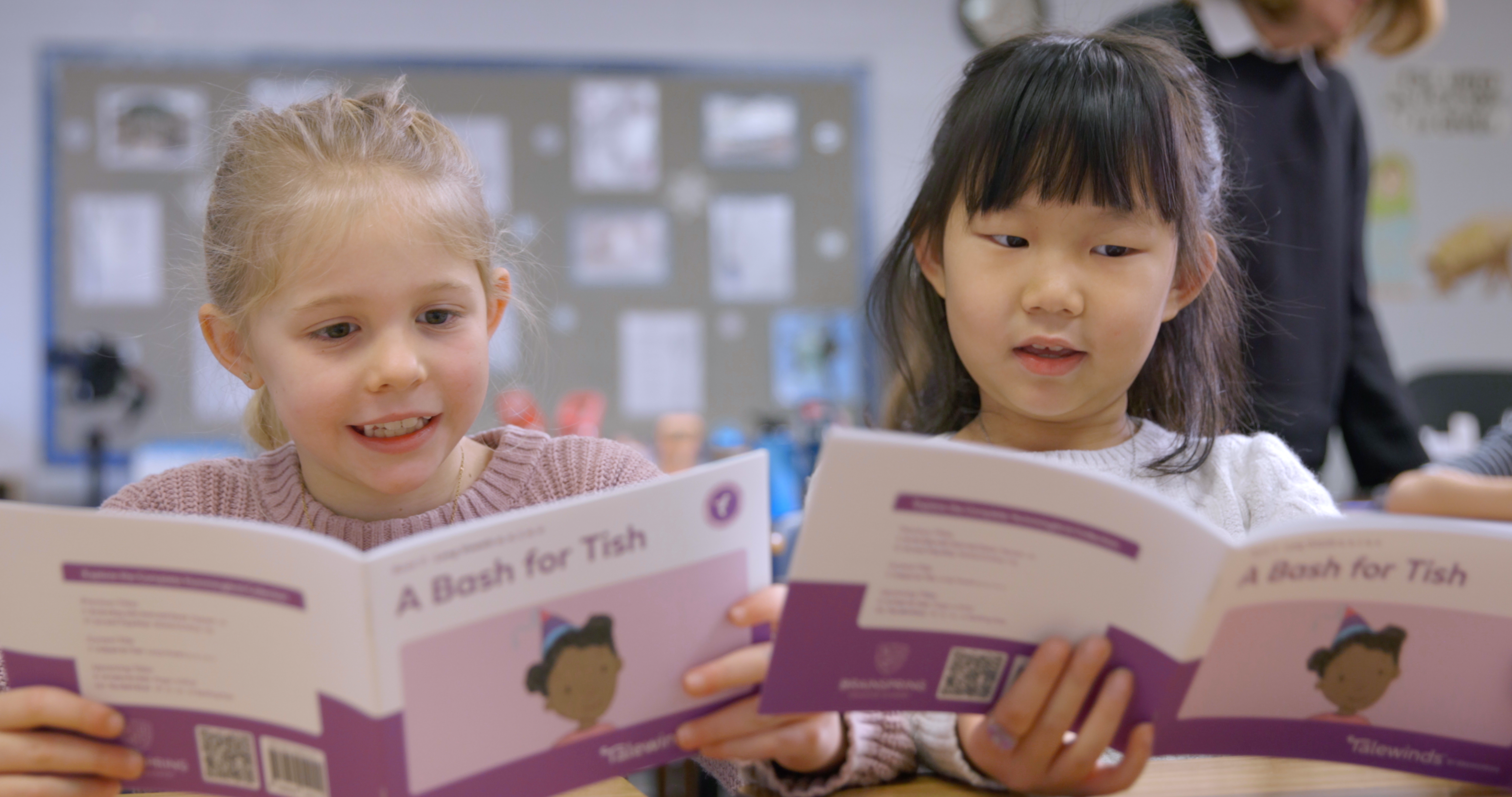
Decodable readers are texts designed so that most words can be read using phonics patterns that students already know. They help early readers apply new skills immediately in connected text. When used with systematic, explicit phonics instruction, decodable readers improve accuracy, fluency, and comprehension (Pennell et al., 2024).
Decodable Readers and the Science of Reading
The science of reading emphasizes the need for students to develop automatic word recognition along with language comprehension to become skilled readers (The Reading League, 2022; Kim & Snow, 2021). Explicit, systematic phonics instruction is a key part of this process. Decodable readers are designed to reinforce that instruction through meaningful practice.
By consistently linking spoken sounds to written letters in connected text, decodable readers aid in orthographic mapping - recognizing words quickly and accurately. When texts match students’ instructional levels , they are less likely to guess or skip words. This supports both comprehension and reading confidence (Khair et al., 2025).
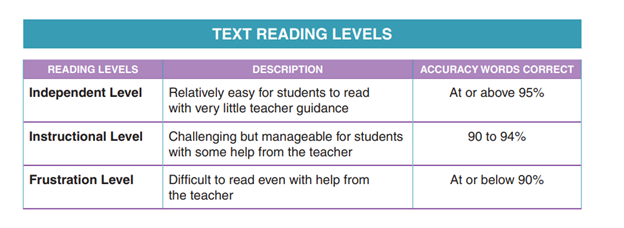
Why Alignment Between Text and Instruction Matters
Research shows that phonics instruction is most effective when the texts students read directly align with the skills taught (Moats, 2020; Mesmer, 2005). Decodable readers offer structured opportunities for retrieval and spaced practice, which improves retention and skill transfer (Latimier et al., 2021; Hughes & Lee, 2019).
However, decodability alone is not enough. High-quality decodable texts also include strong sentence structures, appropriate vocabulary, and engaging, relevant content to keep reading meaningful and enjoyable (Mesmer et al., 2012; Hasbrouck & Tindal, 2006).
Research Evidence Supporting Decodable Readers
While it can be hard to separate the effects of decodable readers from other teaching methods, such as phonics instruction, recent research supports their use. A recent meta-analysis found that decodable texts significantly enhance phonics knowledge and decoding skills, especially for reading pseudowords—a key predictor of later reading success (Murphy Odo, 2024).
Further studies show that students who receive structured phonics instruction alongside decodable texts make greater gains in phonemic awareness, decoding, and oral reading fluency than those with less aligned instruction (Khair et al., 2025; Jimenez et al., 2025). Research also suggests that while various text types can be effective, the early and consistent use of decodable readers boosts word recognition, especially within a complete literacy approach (Jenkins et al., 2009; Pugh et al., 2023).
Decodable readers are most effective when aligned with systematic phonics instruction and used as part of a comprehensive literacy approach—not in isolation.
Supporting Language, Vocabulary, and Comprehension
While some argue that decodable readers limit language development, research grounded in the Reading Is Language (RIL) model emphasizes that reading growth is rooted in oral language and meaning-making, with decoding serving as a critical mechanism that supports, rather than limits, comprehension and language development (Snowling & Hulme, 2025).
Well-crafted decodable texts use rich vocabulary and meaningful content to enhance background knowledge and language skills (Beck et al., 2012). By reducing decoding demands, these texts allow students to focus cognitive resources on understanding and comprehension, particularly when paired with teacher-led discussions and vocabulary instruction.
Instruction Implications
Research consistently shows that decodable readers are most effective when used intentionally. Teachers can maximize their effectiveness by:
- Aligning decodable readers to a phonics skills-based scope and sequence
- Using decodable readers for guided practice instead of independent exploration
- Integrating vocabulary, comprehension, and writing with decoding
- Gradually increasing text difficulty as students become more fluent
Decodable readers are not a replacement for engaging read-alouds or authentic literature. Instead, they act as a crucial instructional bridge, supporting students as they transition from learning to read to reading confidently and understanding text.
Conclusion
Decodable readers are an essential part of effective literacy instruction. Grounded in the science of reading and backed by research, they give students structured practice that develops accurate and fluent word reading while fostering comprehension and language skills. When carefully designed and incorporated within a complete literacy framework, decodable readers help lay the groundwork for confident, capable readers.
Bring the power of decodable readers to your classroom with Talewinds™ Decodable Readers by Brainspring
Explore NowReferences
Beck, I. L., Mckeown, M. G., & Kucan, L. (2012 ). Bringing words to life: robust vocabulary instruction (2nd ed.).Guilford Press.
Birch, R., Sharp, H., Miller, D., Ritchie, D., Ledger, S. (2022). A systematic review of decodable and levelled reading books for reading instruction in primary school contexts: An evaluation of quality research evidence. University of Newcastle.https://www.newcastle.edu.au/__data/assets/pdf_file/0020/804611/Systematic-Literature-Review-UON-Decodable-and-Levelled-Books-PDF.pdf
Castles, A., Rastle, K., & Nelson, K. (2018). Ending the reading wars: Reading acquisition from novice to expert. Psychological Science in the Public Interest, 19(1), 5-51. 10.1177/1529100618772271
Ehri, L. C. (2020). The science of learning to read words: A case for systematic phonics instruction. Reading Research Quarterly, 55, S45–S60.https://doi.org/10.1002/rrq.334
Engel-Wood, T. (2023). Uses of phonics-based and whole language/balanced literacy tools in teaching reading: How does the evidence support student success in the classroom? Canadian Journal for New Scholars in Education, 14(3). https://journalhosting.ucalgary.ca/index.php/cjnse/article/view/77709
Hasbrouck, J., & Tindal, G. (2006, April). Oral reading fluency norms: A valuable assessment tool for reading teachers. The Reading Teacher, 59(7), 636-644.https://ila.onlinelibrary.wiley.com/doi/10.1598/RT.59.7.3
Hughes, C. A., & Lee, J.-Y. (2019). Effective approaches for scheduling and formatting practice: Distributed, cumulative, and interleaved practice. Teaching Exceptional Children, 51(6), 411–423.
Jenkins, J., Peyton, J., Sanders, E., & Vadasy, P. (2009). Effects of decodable text in supplemental first-grade tutoring. Scientific Studies of Reading, 8(1), 53-85. https://doi.org/10.1207/s1532799xssr0801_4
Jimenez, S., Ilievski, I., Mason, M., & Schechter, R. (2025). Just Right Reader Take-Everywhere Literacy Packs Efficacy Study: Examining the impact on Kindergarten Students from MOY to EOY 2025. LXD Research.
Khair, N. S. M. M., Rafik-Galea, S., Yasin, F., Noor, M.M., & Armum, P. (2025). Enhancing preschoolers’ reading fluency through shared reading with decodable texts: A quasi-experimental study. International Journal of Research and Innovation in Social Science, 9(3), 2609-2618. https://dx.doi.org/10.47772/IJRISS.2025.90300204
Kim, Y.-S. G., & Snow, C. (2021). The science of reading is incomplete without the science of teaching reading. The Reading League Journal, 2(3), 5–13.https://doi.org/10.1080/10888438.2024.2380272
Latimier, A., Peyre, H., & Ramus, F. (2021). A meta-analytic review of the benefit of spacing out retrieval practice episodes on retention. Educational Psychology Review, 33(3).https://doi.org/10.1007/s10648-020-09572-8
Mesmer, H. A. (2005). Text decodability and the first grade reader. Reading and Writing Quarterly: Overcoming Learning Difficulties, 2(1), 61-86.10.1080/10573560590523667
Mesmer, H.A., Cunningham, J.W., & Hiebert, E. (2012). Toward a theoretical model of text complexity for the early grades: Learning from the past, anticipating the future. Reading Research Quarterly, 47(3), 235-258.https://doi.org/10.1002/rrq.019
Moats, L. C. (2020). Speech to print: Language essentials for teachers (3rd ed.). Paul H. Brookes Publishing Co.
Murphy Odo, D. (2024). The use of decodable texts in the teaching of reading in children without reading disabilities: A meta-analysis. Literacy, 58(3), 267–277.https://doi.org/10.1111/lit.12368
National Center for Education Statistics.(n.d.). Nation’s report card: 2024 National Assessment of Education Progress reading assessment. National Center for Education Statistics, Institute of Education Science, U.S. Department of Education.
Pennell, A.E., Payne Jordan, R.L., Turner Nash, K., Elson, K., & Trathen, W. (2024). A healthy diet for beginning readers: Decodable texts as part of a comprehensive literacy program. Reading Teacher, 77(5), 673–684.https://doi.org/10.1002/trtr.2287
Pugh, A., Kearns, D. M., & Hiebert, E. H. (2023). Text types and their relation to efficacy in beginning reading interventions. Reading Research Quarterly, 58(4), 710–732. https://doi.org/10.1002/rrq.513
Snowling, M. J., & Hulme, C. (2025). The Reading is language model: A theoretical framework for language and reading development and intervention. Annual Review of Developmental Psychology, 7, 195-218.https://doi.org/10.1146/annurev-devpsych-111323-084821
The Reading League. (2022). Science of reading: Defining guide.https://www.thereadingleague.org/what-is-thescience-of-reading/
Thomas, P. (2022). The science of reading movement: The never-ending debate and the need for a different approach to reading instruction. National Education Policy Center.https://eric.ed.gov/?id=ED625611