Building the Foundation: Why Early Literacy Concepts Matter for Advanced Reading Development
Posted by Brainspring on 9th Mar 2026



Learning to read and write starts with the basics, which are the foundation for everything that comes later. Research in reading development consistently demonstrates that students who master early literacy concepts—oral language, phonological awareness, concepts of print, alphabet knowledge, the alphabetic principle, rapid automatic naming, and letter formation—are far more likely to become fluent readers and effective writers. This is because the skills they learn early on are the building blocks for everything that comes later. For example, when kids learn about the sounds of language, they are learning a skill that will help them to sound out words when they read. If they do not learn this skill, they might struggle with reading later on. The same is true for writing - if they do not learn how to form letters and spell words, they will have a harder time writing clearly and correctly. It is crucial for children to build a strong foundation of early literacy skills. This article underscores the critical role of early literacy concepts in establishing the foundation for more advanced reading skills and highlights the instructional implications of this foundational work.
Oral Language: The Root of Literacy Development
Structured literacy recognizes that reading is not separate from language; rather, it grows directly out of oral language competence. Instruction must integrate listening, speaking, reading, and writing in a coherent progression that builds from phonology and morphology to syntax and semantics. Oral language includes phonology, morphology, semantics, syntax, pragmatics, and discourse—all of which contribute to later reading success.
Oral language is a strong predictor of later reading comprehension and overall academic achievement (Kendeou, P., et al., 2009). When children begin school with a good grasp of spoken language, they tend to do better in reading and overall academics. This is because they already have a strong foundation in vocabulary, sentence structure, and conversation skills, which helps them understand more complex texts as they get older. If students can decode words well but struggle with spoken language, they might have trouble understanding what they are reading. On the other hand, if they have great spoken language skills, but struggle with sounding out words, they may have difficulty reading independently. So, effective literacy instruction should focus on developing both of these skills together.
Importantly, early oral language gaps tend to widen over time if not addressed (Dailey, S., & Bergelson, E., 2021). As texts become more linguistically complex, students with weaker vocabulary and syntactic knowledge struggle to access grade-level content. Early and sustained attention to oral language development—through read-alouds, structured discourse, explicit vocabulary instruction, and narrative retelling—helps prevent long-term comprehension difficulties.
Phonology and Phonological Awareness: Linking Speech to Print
If oral language provides the root system of literacy, phonology provides the structure that links spoken words to written symbols (Moats, L. C.,2020). Phonological awareness—the ability to consciously attend to and manipulate the sound structures of spoken language—is one of the strongest early predictors of reading and spelling success (Moats, L. C., 2020).
Phoneme awareness, in particular, enables students to understand that spoken words are made up of discrete sounds. This awareness is critical for mastering the alphabetic principle—the understanding that letters and letter patterns represent phonemes in spoken language. Understanding of the alphabetic principle develops gradually and alongside phoneme awareness when instruction explicitly links phonemes with graphemes (IDA, 2022).
Recent research supports integrating print into phoneme awareness instruction. When students actively produce sounds through saying, writing, and spelling, rather than simply recognizing letter-sound relationships, the connection between speech and print strengthens (Møller, H. L., et al., 2021). This connection is important because it helps children remember words easily, so they can store them in their long-term memory and recognize them quickly when they see them again.
Without explicit phoneme-level instruction, students may remain in earlier phases of reading development and struggle to progress to more advanced decoding and comprehension skills. Mastery of phoneme blending and segmentation is therefore not optional; it is foundational to fluent word recognition.
Concepts of Print: Understanding How Text Works
Before children can decode words, they must understand how print works. Concepts of print include understanding that print carries meaning, understanding directionality (left to right, top to bottom), identifying word boundaries, and knowing the structural features of books.
These understandings do not develop automatically. They emerge through meaningful interactions with print, scaffolded by adults (Justice, L. M., & Ezell, H. K., 2004). A child who does not grasp that words are stable units of print or that letters represent sounds will struggle to apply phonics knowledge effectively. Concepts of print, therefore, serve as a bridge between oral language and formal decoding instruction.
For multilingual learners, explicit teaching of English print conventions, while valuing home language literacy experiences, is particularly important. Differences in directionality, spacing, and symbol systems may require targeted instruction to ensure transfer of literacy skills across languages.
Alphabet Knowledge and the Alphabetic Principle

Alphabet knowledge—the ability to recognize, name, and produce letter sounds—is one of the strongest predictors of later reading achievement (National Early Literacy Panel, 2008). Children who enter school with little or inconsistent letter knowledge are at increased risk for decoding difficulties and long-term reading challenges.
The alphabetic principle builds upon this knowledge. As students start to understand the connection between spoken sounds and written symbols, they get better at figuring out what words say, and it becomes easier for them to focus on what the words mean. This helps them to read more fluently and comprehend what they are reading.
Research underscores the importance of explicit, systematic instruction that connects letter names and sounds in a logical sequence, with opportunities for practice and review (Demchak, A. N., & Solari, E., 2025). Without mastery of the alphabetic principle, advanced reading skills—such as multisyllabic word analysis, morphological awareness, and fluency—cannot develop efficiently.
Rapid Automatic Naming and Fluency
When we look at how quickly children can name things like letters or numbers, we see how quickly their brains can retrieve information from memory. This is called Rapid Automatic Naming, or RAN for short. Strong RAN performance predicts reading fluency because it reflects the efficiency of neural retrieval processes (Mather, N., & Schneider, D., 2023).
While phonological awareness supports decoding accuracy, RAN supports decoding speed and fluency. Together, these processes underpin automatic word recognition. Fluent readers can allocate cognitive resources to comprehension, inference, and critical analysis. Students who struggle with retrieval may decode accurately but read slowly, limiting comprehension.
Letter Formation and Handwriting: Supporting Orthographic Mapping
Handwriting is often overlooked in literacy discussions, yet research demonstrates that writing by hand activates more neural pathways than typing and supports retention, spelling, and comprehension (Askvik, E. O., et al., 2020). Fluent letter formation strengthens grapheme-phoneme connections and supports orthographic mapping (Ray, K., et al., 2021).
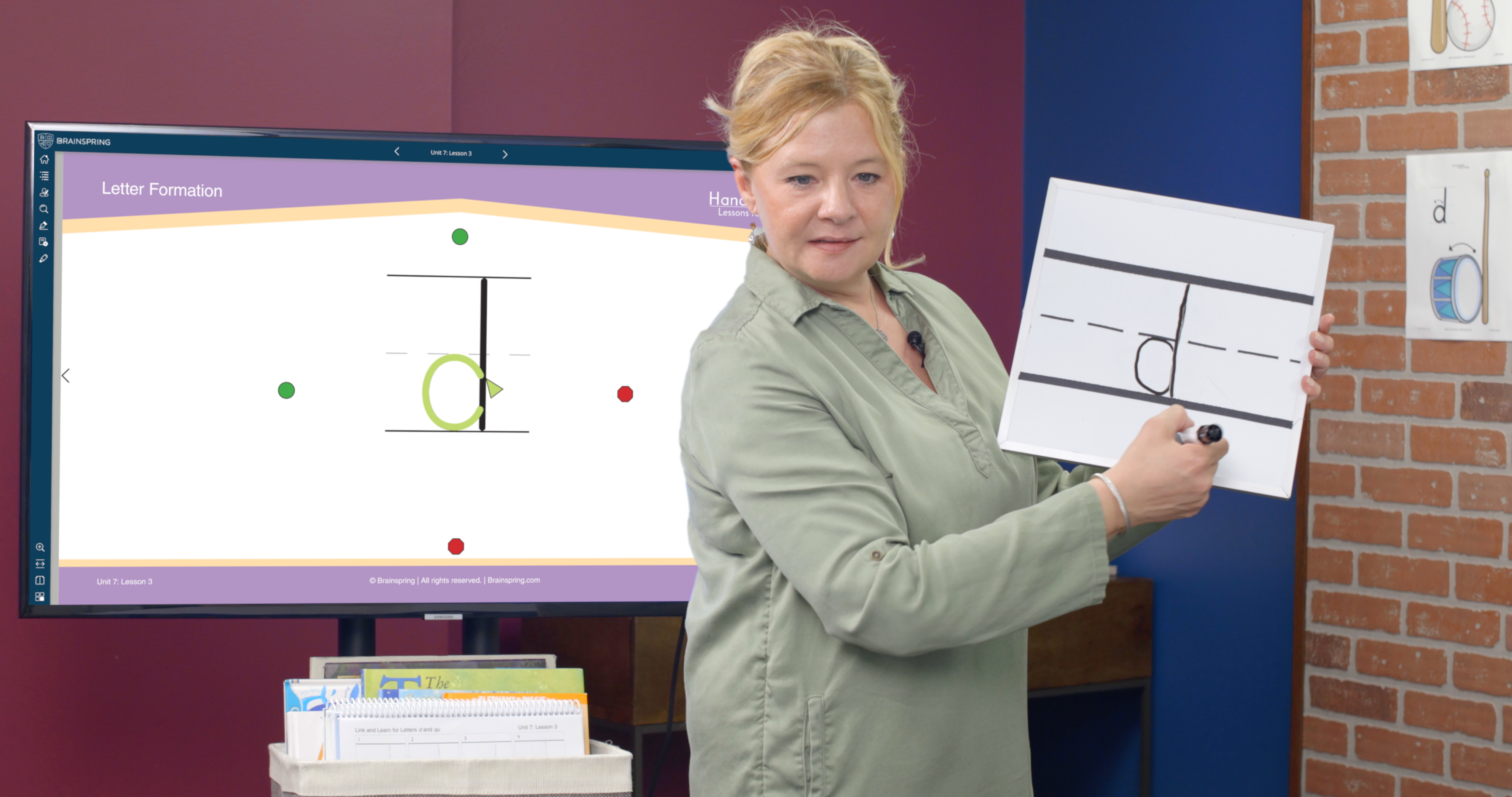
When we can write letters easily, our brain can focus on more important things, like understanding what we are writing and putting our thoughts into words. On the other hand, if writing letters is hard, it can make spelling, building sentences, and expressing ourselves in writing more difficult. Teaching young children how to form letters in a systematic way, along with phonics and phonemic awareness, helps connect sounds to symbols, making writing easier and more meaningful. By mastering letter formation, kids can free up their brain power to think about what they want to say, rather than struggling to write it down.
Instructional Implications and Long-Term Outcomes
Early literacy instruction must be explicit, systematic, cumulative, and integrated across domains. Phonemic awareness, phonics, vocabulary, comprehension, and writing should not be taught in isolation but woven together within daily lessons (Ehri, L. C., 2022).
Students who receive comprehensive foundational instruction are better positioned to move from early decoding phases to advanced reading proficiency. They can analyze multisyllabic words, apply morphological knowledge, comprehend complex syntax, and engage in critical thinking about text.
In contrast, students with gaps in early literacy often experience compounding difficulties. Weak phonological processing may limit decoding; limited vocabulary may constrain comprehension; dysfluent handwriting may hinder written expression. These challenges highlight the urgency of early, targeted intervention (Rice, M., Erbeli, F., & Wijekumar, K., 2023).
References
Askvik, E. O., Van der Weel, F. R., & Van der Meer, A. L. H. (2020). The importance of cursive handwriting over typewriting for learning in the classroom: A high-density EEG study of 12-year-old children and young adults. Frontiers in Psychology, 11, 1810.
Dailey, S., & Bergelson, E. (2021). Language input to infants of different socioeconomic statuses: A quantitative meta-analysis. Developmental Science, 24(3), e13030.
Demchak, A. N., & Solari, E. J. (2025). Brick by brick: Insights on alphabet instruction. Reading Research Quarterly. Advance online publication.
Ehri, L. C. (2022). What teachers need to know and do to teach letter-sounds effectively. The Reading Teacher, 75(6), 683-693.
Justice, L. M., & Ezell, H. K. (2004). Print referencing: An emergent literacy enhancement strategy and its clinical applications. Language, Speech, and Hearing Services in Schools, 35(2), 185-193.
Kendeou, P., Van den Broek, P., White, M. J., & Lynch, J. S. (2009). Predicting reading comprehension in early elementary school: The independent contributions of oral language and decoding skills. Journal of Educational Psychology, 101(4), 765-778.
Mather, N., & Schneider, D. (2023). The use of cognitive tests in the assessment of dyslexia. Journal of Psychoeducational Assessment, 41(1), 3-17.
Moats, L. C. (2020). Speech to print: Language essentials for teachers (3rd ed.). Brookes Publishing.
Møller, H. L., et al. (2021). Effects of integrated spelling in phonics instruction on early reading development. Scientific Studies of Reading, 25(4), 318-336.
National Early Literacy Panel. (2008). Developing early literacy: Report of the National Early Literacy Panel. National Institute for Literacy.
Ray, K., Graham, S., Houston, J., & Harris, K. R. (2021). The relationship of handwriting ability and literacy outcomes in kindergarten. Reading and Writing, 34(7), 1759-1784.
Rice, M., Erbeli, F., & Wijekumar, K. (2023). Phonemic awareness: Evidence-based instruction and intervention. Reading & Writing Quarterly, 39(2), 123-140.