Morphology
Posted by Brainspring on 4th May 2026



From Word Structure to Meaning: Morphology as a Foundation for Disciplinary Literacy
Students encounter increasingly complex academic texts across domains, such as science and history, as they progress beyond primary grades. These texts are characterized by advanced terminology, abstract concepts, and syntactically sophisticated language structures. Content instruction often presumes that students have the language skills necessary to navigate these demands. This assumption overlooks differences in prior knowledge, language exposure, and familiarity with academic vocabulary (Vaughn et al., 2023). For many learners, including those with dyslexia and multilingual learners, the linguistic complexity of disciplinary texts, such as science, mathematics, history, and English language arts, presents a significant barrier to comprehension (Catts, 2022; Lesaux et al., 2023).
Morphology, the study of morphemes, is typically underutilized within traditional classrooms. Teaching students to recognize the relationship between words based on their smallest units of meaning is a systematic approach to making word structure visible. Morphologically complex words occur more frequently in written than spoken language, accounting for approximately 80% of the words in text (Bowers et al., 2010). As a morphophonemic language, the English writing system represents both sound and meaning. This dual structure allows words to be analyzed by their phonological patterns and meaningful parts, such as suffixes. When the suffix -ity is added to the end of electric, both the pronunciation and grammatical function of the word change when forming electricity. This illustrates how morphology connects phonology, orthography, and meaning (Henry, 2010).
Conceptualizing Morphology: From Awareness to Application
Morphological awareness is the conscious understanding that words are composed of meaningful parts, such as roots, prefixes, and suffixes. It is a strong predictor of reading success (Hennenfent et al., 2022). Domain-specific texts in grades 4-12 contain morphologically complex words that account for the majority of the unfamiliar vocabulary that students encounter and must understand to comprehend the text. (Lesaux et al., 2023; Stevens et al., 2021). Students with morphemic-level knowledge are better equipped to infer meaning, recognize relationships among words, and access grade-level content (Liu et al., 2024). Words such as biodegradable, disenfranchised, and receptive become more recognizable when students can analyze their related parts to identify common morphemes. Which is why morphology serves as a bridge between decoding words and higher-level comprehension (Vaughn et al., 2023; Stevens et al., 2021).
Morphological knowledge develops along a continuum from awareness to analysis. Morphological awareness is a metalinguistic skill that involves recognizing that words are composed of meaningful parts and understanding how those parts work together to provide a word's meaning and grammatical function (Liu et al., 2022). When practiced alongside print, this awareness integrates phonological, semantic, and syntactic processes, strengthening the connections among sound, spelling, and meaning.
When students begin applying this knowledge, they engage in morphological analysis, which involves breaking down unfamiliar words into morphemes to infer their meanings and grammatical roles within sentences. Morphological awareness focuses on recognizing and understanding word parts, while morphological analysis requires students to actively use those parts as tools for decoding, interpreting, and producing language. Students who use morphologically complex words in their speech are more likely to incorporate them in their writing.
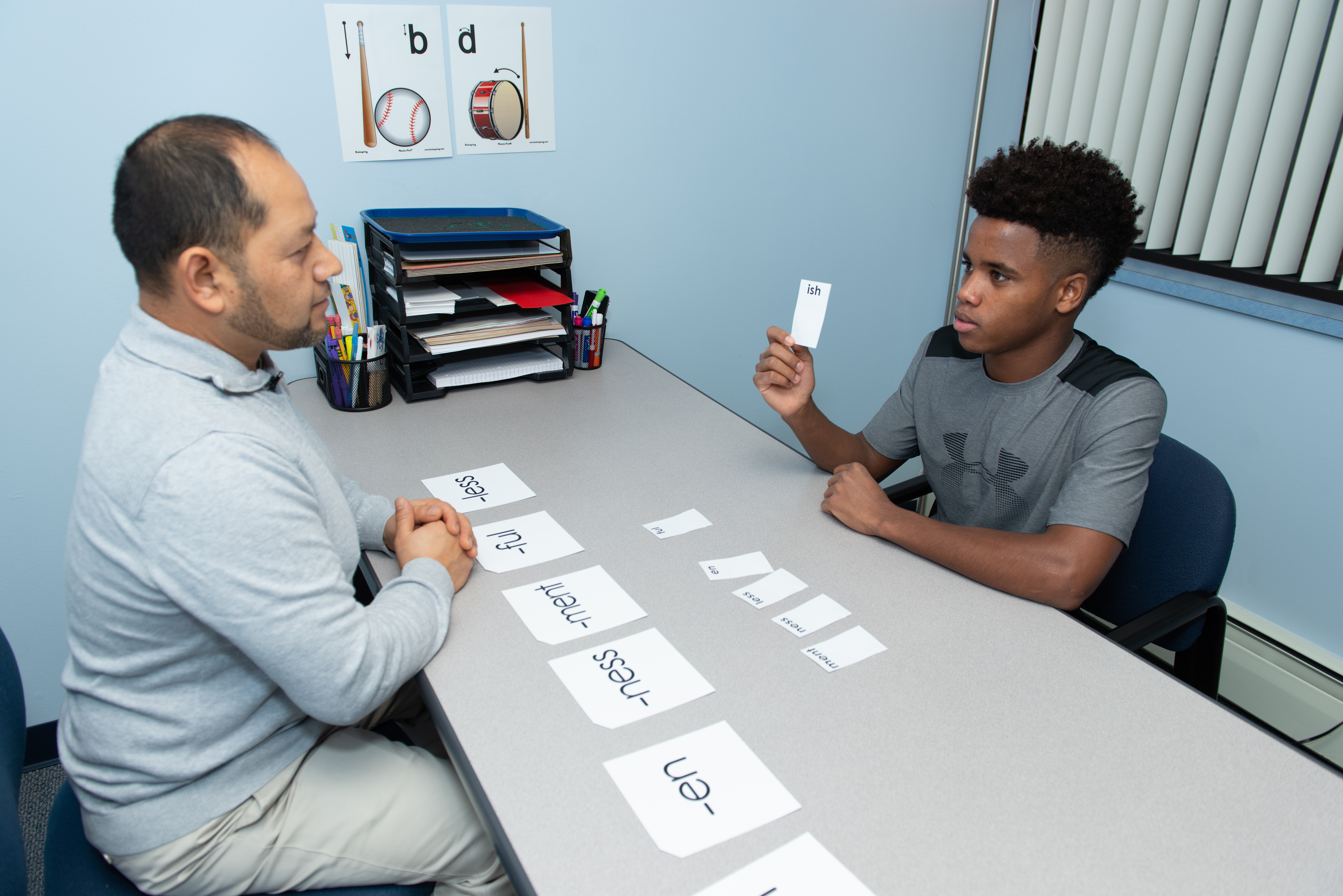
High-quality morphology instruction supports morphological awareness and analysis.
Effective instruction begins in early elementary when teachers introduce inflectional suffixes. It becomes increasingly systematic, as educators explicitly teach common roots, prefixes, and derivational suffixes, emphasizing how their meaningful parts combine (Bowers et al., 2010; Henry, 2010). Teachers should highlight how affixes influence pronunciation, meaning, and grammatical function, which helps students understand how word structure supports sentence-level comprehension. Instruction should move beyond recognition to application of skills, providing opportunities to analyze unfamiliar words, generate related word forms, and apply morphological knowledge within authentic reading and writing tasks (Stevens et al., 2021). This shift from awareness to analysis is essential for supporting disciplinary literacy, where students must independently navigate complex, domain-specific language.
Morphology as a Bridge to Disciplinary Literacy
By weaving morphological awareness and analysis into content-area lessons, educators can shift from isolated vocabulary instruction to equipping students with transferable word-level strategies for analyzing words and deepening vocabulary knowledge across disciplines (Hennenfent et al., 2022). When students recognize a word form, they have a gateway to access a less familiar word. One morpheme can unlock the meaning of thousands of words. Morphology instruction supports comprehension by helping students unpack the meaning embedded within complex words, which are often critical to understanding key concepts (Stevens et al., 2021).
Morphology offers an additional advantage for multilingual learners by enabling cross-linguistic connections. Cognates, words or morphemes that share a common origin across languages, provide a powerful entry point for understanding new vocabulary (Kieffer & Lesaux, 2012). Educators can support deeper comprehension by leveraging students' existing linguistic knowledge of a word or word part, while affirming and valuing multilingualism (Lesaux et al., 2023). Cognates support bilingual students in accessing grade-level texts.
Morphology is essential for disciplinary literacy because it helps students understand the complex, content-specific (Tier Three) vocabulary commonly found in academic texts. Each discipline relies on networks of related words that share common roots and affixes (e.g., transport, import, export in social studies; biology, biodegradable in science). Understanding the relationship between morphemes allows students to build vocabulary more efficiently and recognize patterns across texts (Lesaux et al., 2023). Morphology instruction supports comprehension by helping students unpack the meaning embedded within complex words (Stevens et al., 2021). Rather than memorizing isolated terms, students learn to analyze and interpret language in ways that transfer across contexts. This approach is particularly important when the volume and complexity of academic vocabulary increase significantly (Lesaux et al., 2023).
Instructional Implications
To effectively support disciplinary literacy, morphology instruction should be explicit, systematic, and integrated across content areas (Vaughn et al., 2023; Stevens et al., 2021). Instruction should prioritize pattern recognition and meaning-making rather than rote memorization of word lists (Bowers et al., 2010). Teachers can support this by modeling how to analyze word structure, guiding students to make connections among related words, and providing repeated opportunities to apply morphological knowledge in meaningful contexts.
Additionally, instruction should emphasize the role of suffixes in signaling grammatical changes, helping students understand how word structure contributes to sentence meaning (Henry, 2010). Educators should encourage students to think about how and why words change when affixes are added or removed. Vocabulary knowledge is deepened as connections between words are strengthened, reinforcing the need for systematic morphology instruction. By embedding it within disciplinary instruction, educators can provide students with the tools they need to navigate complex texts, expand their vocabulary, communicate their ideas with greater clarity and precision, and anchor learning for deeper knowledge building. (Vaughn et al., 2023; Lesaux et al., 2023).

Vocabulary knowledge is deepened as connections between words are strengthened, reinforcing the need for systematic morphology instruction.
Resources:
Bowers, P. N., & Kirby, J. R. (2010). Effects of morphological instruction on vocabulary acquisition. Reading and Writing, 23(5), 515-537. https://doi.org/10.1007/s11145-009-9172-z
Catts, H. W. (2022). The role of language in reading development and reading disability. Topics in Language Disorders, 42(2), 101-115. https://doi.org/10.1097/TLD.0000000000000290
Hennenfent, L., Johnson, L. J., Novelli, C., & Sharkey, E. (2022). Intensive Intervention Practice Guide: Explicit Morphology Instruction to Improve Overall Literacy Skills in Secondary Students. National Center for Leadership in Intensive Intervention. U.S. Office of Special Education Programs.
Henry, M. K. (2010). Unlocking literacy: Effective decoding and spelling instruction (2nd ed.). Paul H. Brookes Publishing.
Kieffer, M. J., & Lesaux, N. K. (2012). Direct and indirect roles of morphological awareness in the English reading comprehension of native English, Spanish, Filipino, and Vietnamese speakers. Language Learning, 62(4), 1170-1204.https://doi.org/10.1111/j.1467-9922.2012.00722.x
Kim Y. G. (2023). Executive Functions and Morphological Awareness Explain the Shared Variance Between Word Reading and Listening Comprehension. Scientific Studies of Reading : The Official Journal of the Society for the Scientific Study of Reading, 27(5), 451-474. https://doi.org/10.1080/10888438.2023.2195112
Lesaux, N. K., Crosson, A. C., Kieffer, M. J., & Pierce, M. (2023). Uneven profiles: Language minority learners' word reading, vocabulary, and reading comprehension skills. Reading Research Quarterly, 58(1), 95-115. https://doi.org/10.1002/rrq.432
Liu, Y., Groen, M. A., & Cain, K. (2024). The Association Between Morphological Awareness and Reading Comprehension in Children: a Systematic Review and Meta-analysis. Educational Research Review, 42(100571). https://doi.org/10.1016/j.edurev.2023.100571
Stevens, E. A., Vaughn, S., Capin, P., Wanzek, J., Roberts, G., & Danielson, L. (2021). The effects of reading comprehension interventions on the reading comprehension performance of students with reading difficulties:A meta-analysis. Exceptional Children, 87(2), 163-183. https://doi.org/10.1177/0014402920947986
Vaughn, S., Roberts, G., Wanzek, J., & Vaughn, M. G. (2023). Reading comprehension and students with reading difficulties: The role of instruction and text. Reading Research Quarterly, 58(S1), S179-S196. https://doi.org/10.1002/rrq.497